Weeks before Melbourne Fashion Week’s Student Collections Runway, VoxFrock journalist Evan Lim caught up with a gifted three of the 30 graduates picked to participate in the coveted 2026 show. Chloe Danielle Tooker, Mu Chaw Klay and Katrina Kan were preparing for this pinnacle moment in their fledgeling careers. They explained their modus operandi to Evan, how they embed a mix of memories, culture and aesthetic theory into their original designs. Scroll down to meet Evan and VoxFrock’s newest crew photographer, Alice Naish whose complete photo essay of the Student Collections Runway show is a piece de resistance clickable at voxfrock.com.au. Bon appetit Dear Readers and, click back (and back and back) for final daily reports by the VoxFrock 2026 MFW crew till the last runway lights wink off on Sunday, October 25.
Words: Evan Lim Photographs: Alice Naish
Chloe Danielle Tooker
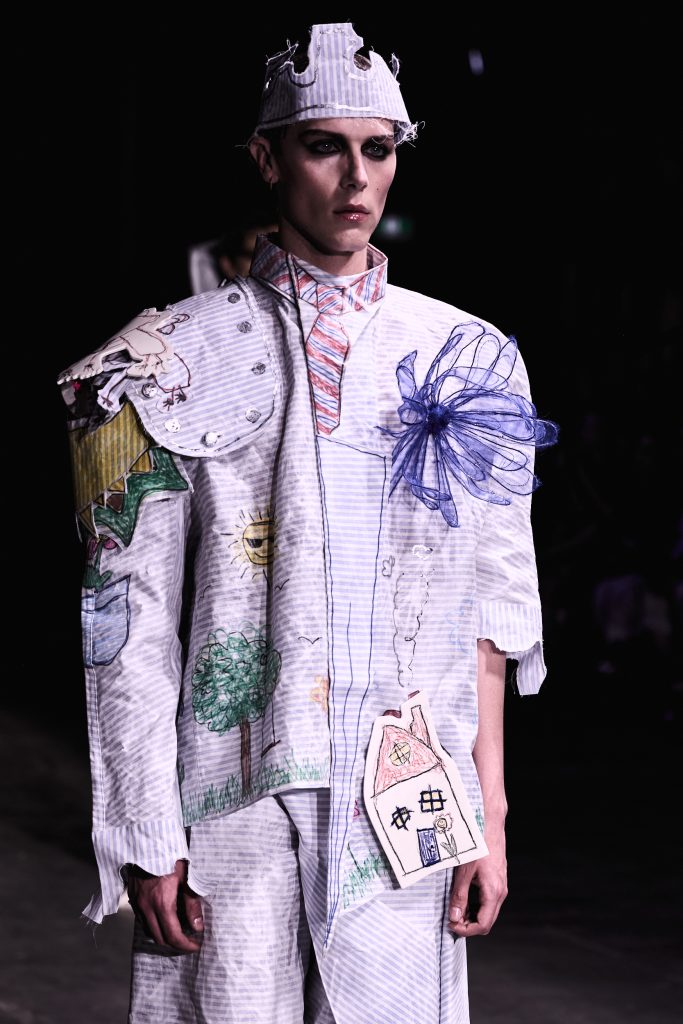
The idea for Chloe’s collection, Her Paper Home was sparked by her niece, calling her out on a lie and recognizing that as something she used to do herself as a kid.
“I would always boost up who I was or what I had done or who I’d met… ” she recalls. “I remember one time, I think I said that One Direction came to my birthday…It started this spiral of thinking like; why do kids lie? Why do kids lie about things that they don’t need to?” Chloe mused. “And, I realize, it’s because we are so insecure…anyone lies when they don’t need to.”
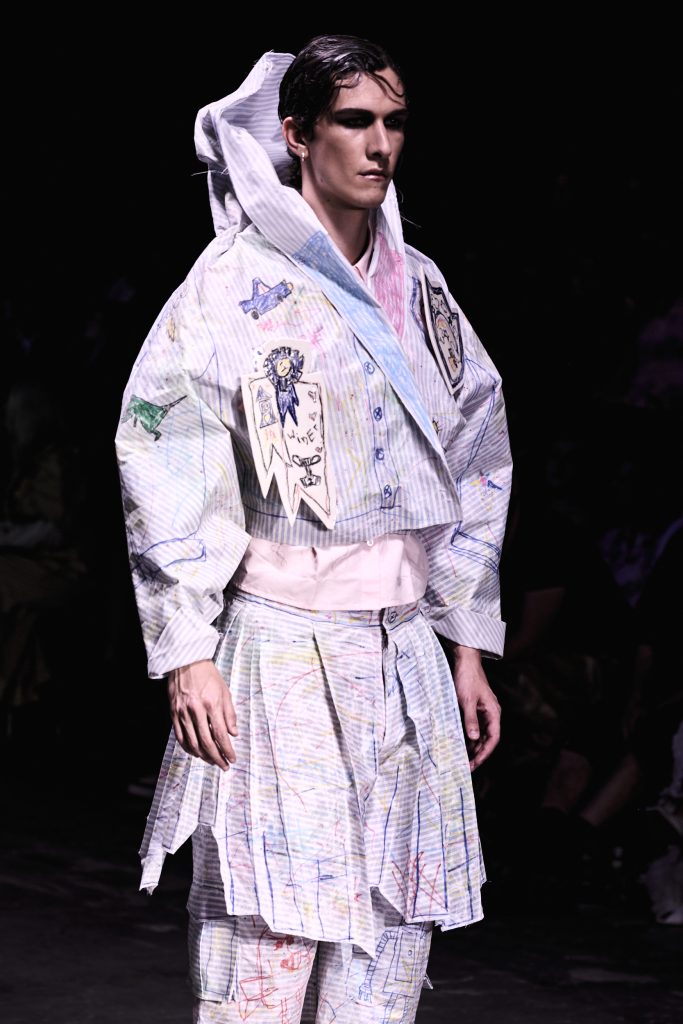
For Chloe, that early insecurity came from moving to the wealthy Sydney neighbourhood of Manly as a kid with her single mother. At school her friends, she says; “Were doctors and psychologists and engineers and investment bankers…It was just like this weird juxtaposition; navigating the same environment as those kids, but not having the same sort of background.”
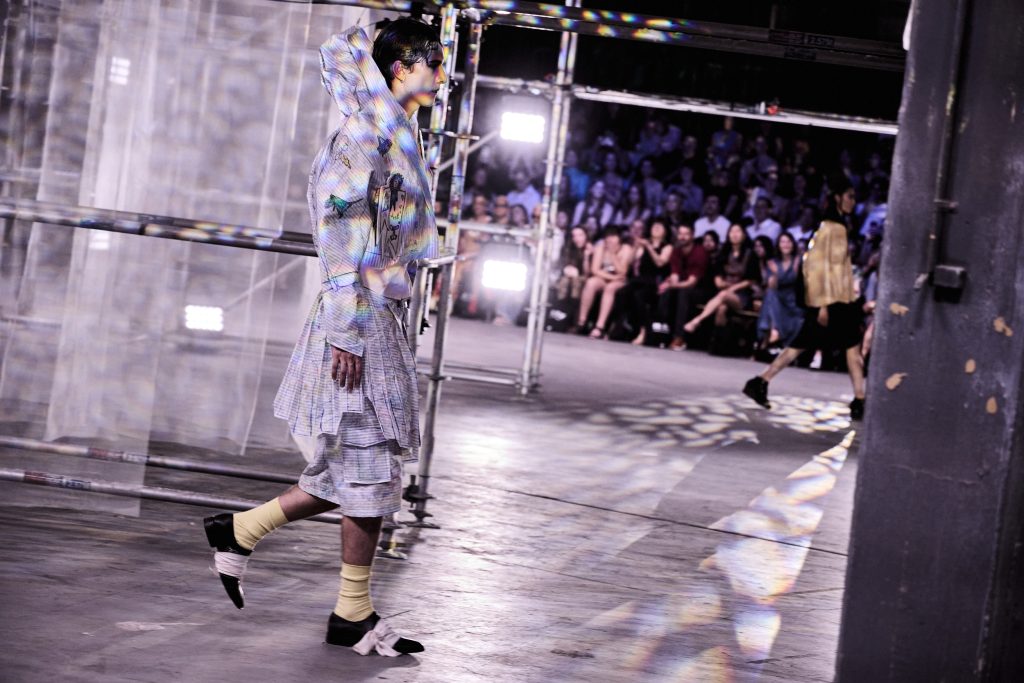
Chloe wove this narrative into her collection; the perspective of a little girl who wants to belong to family she doesn’t have and who creates her own “dream family” to compensate. She imitated paper in the designs by waxing cotton shirting and fusing it with organza, giving the material the feel and look of aged paper. “Each look in the collection is a parallel to a member of the nuclear family,” says Chloe. There’s the mum, for example, represented in the form of a house. “It’s this idea of mums or women losing identity when they become mothers,” she adds. The father, on the other hand, follows the idea of a white knight.
Mu Chaw Klay
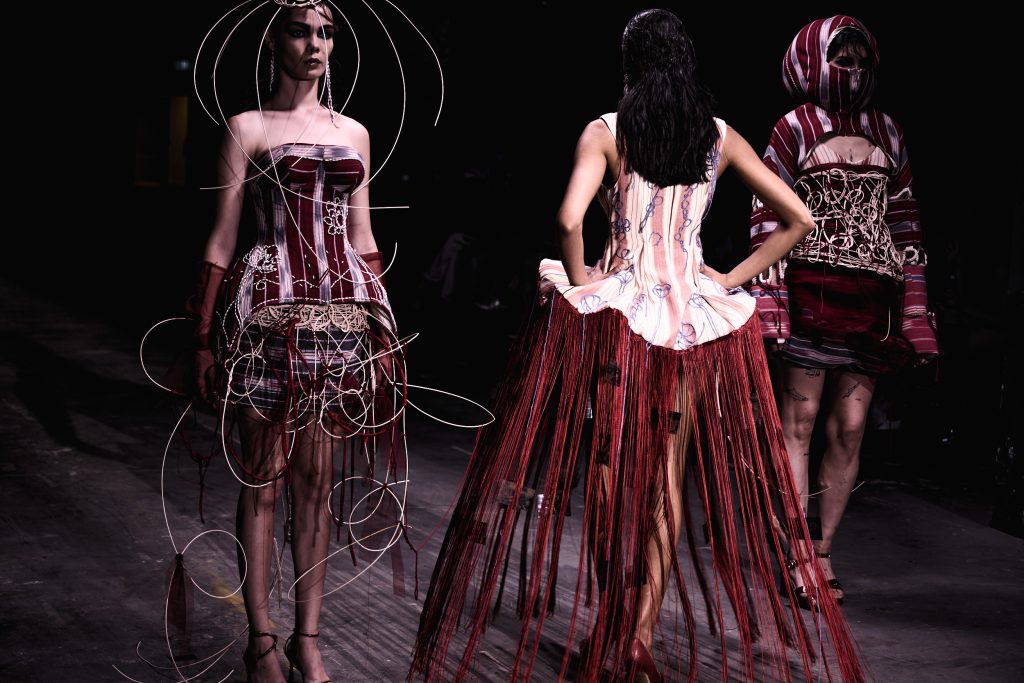
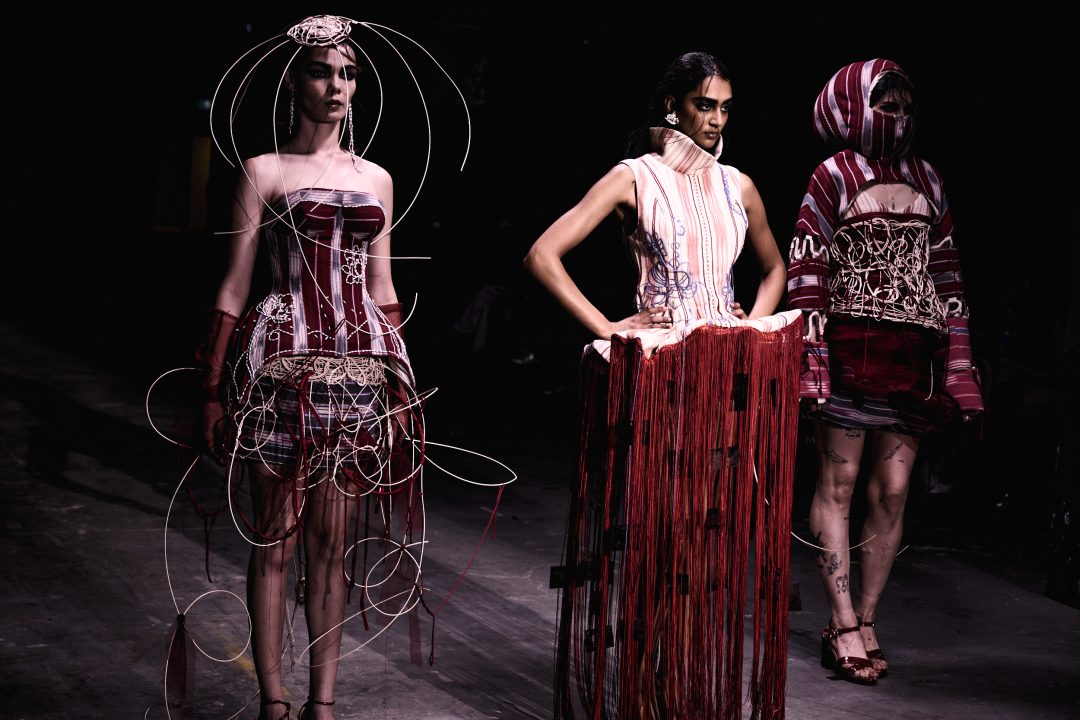
Klay’s collection The Unbroken Thread mirrors the journey she and her family took, immigrating to Australia from the civil war in Myanmar. She has split the collection into three: conflict, displacement, and resilience.
Garments are made using traditional handwoven Karen fabrics, reflecting Klay’s heritage, dyed a deep burgundy red to symbolize conflict and blood. Details include embroidered lotus seeds in the shape of a lotus flower, symbolizing growth and freedom. When the seeds could not be shipped to Australia, however, Klay took them from an old traditional shirt her family had. “It was my mom’s and grandma’s,” she says, laughing. “They didn’t really need it, so I took them out one by one.”
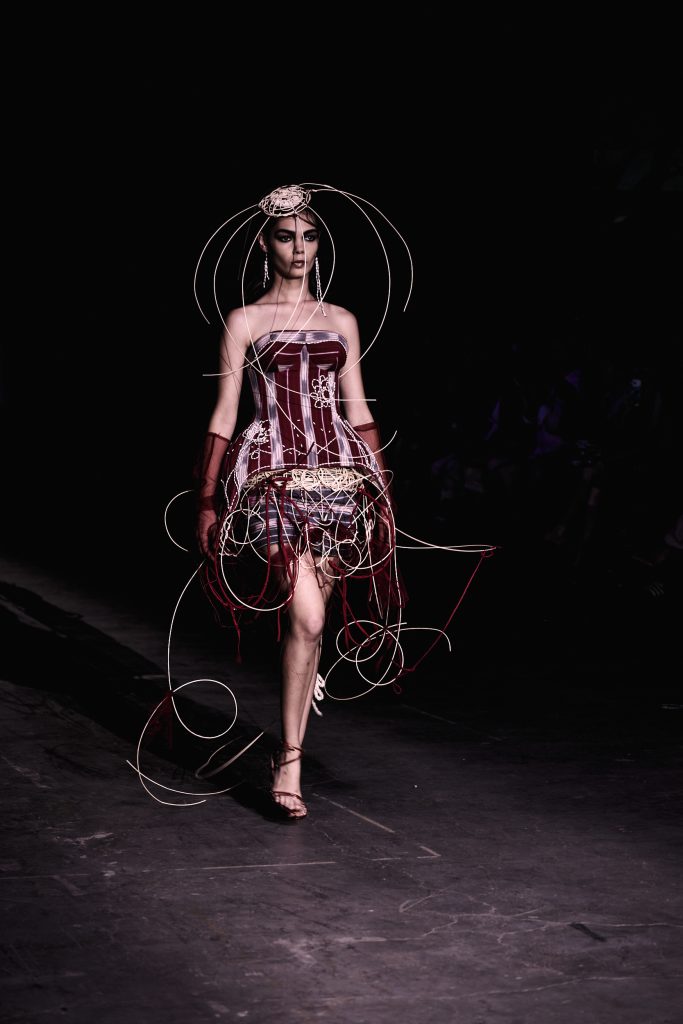
Another “through” line in the collection is a red thread, Klay’s own interpretation of the “red string theory” which has origins in Japan. Legend has it a red string connects us to our soulmate. In one of Klay’s designs, the red strings are, as she says; “all tangled up and hitting each other to display conflict”, then smoothing to being flowing and untangled in the last design.
Klay has also experimented with techniques from sculpted wires to creating scaffold-like structures using rattan canes. And, she’s worked with a “freehand” embroidery machine, a dramatic personal learning curve. “If you do it wrong,” she says, “The twine or the thread would unravel, so you have to be really careful with it.”
Katrina Kan
Katrina didn’t touch a sewing machine before fashion school. Prior to starting, she completed a PhD in neuroscience, giving herself two weeks to find a job. When it didn’t happen, she signed up for a course in fashion photography and styling. “I felt like at the time if I didn’t do it, then I would never do it,” she remembers. “I would just keep going down that trajectory, and I would never explore the side of me that I’m curious about.” The course required students to make a t-shirt for a shoot, and it was there Katrina realized she enjoyed making clothes. “I really liked the process of being in full control of everything so, making my garments and then shooting them.”
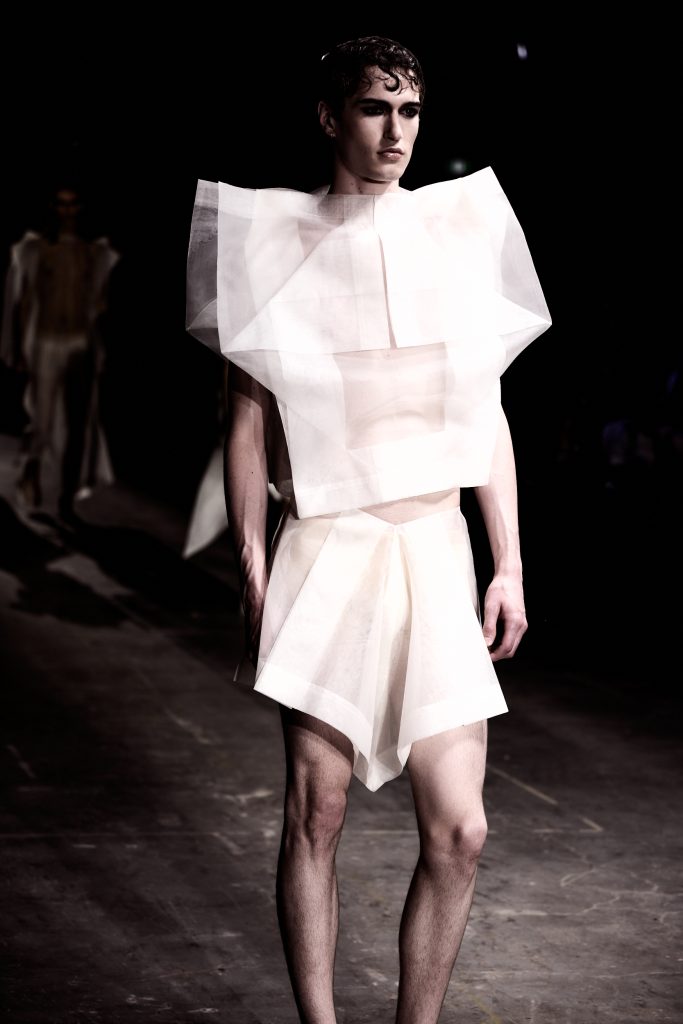
Her collection, Restraint as Authorship, stemmed from feeling guilt that fashion wasn’t as conventionally meaningful as a career in science. She also wasn’t always proud of the work she did at school, often adding – unnecessarily – more to her designs for a kind of validation. She adopted an opposite approach to compensate, stripping things back: a single piece of square, silk organza fabric, and resorting only to hand-sewing. “It kind of just became a search for meaning through the process itself, as opposed to what it looks like at the end.”
Origami was one inspiration behind Katrina’s concept of stripping back, resonating with the discipline and restraint involved. She came up with prototype designs using a simple square of paper. The handwork then involved for each piece that evolved could be around 100 hours to sew, a process Katrina describes as “an exercise in patience”. Now, she’s proud of the result, the collection showing Melbourne Fashion Week’s Student Collections Runway. “I know that I put all that work in. I know that I did it for myself, and not because I wanted validation from from anyone else.”
Meet the VoxFrockers
Evan Lim, photographer/journalist
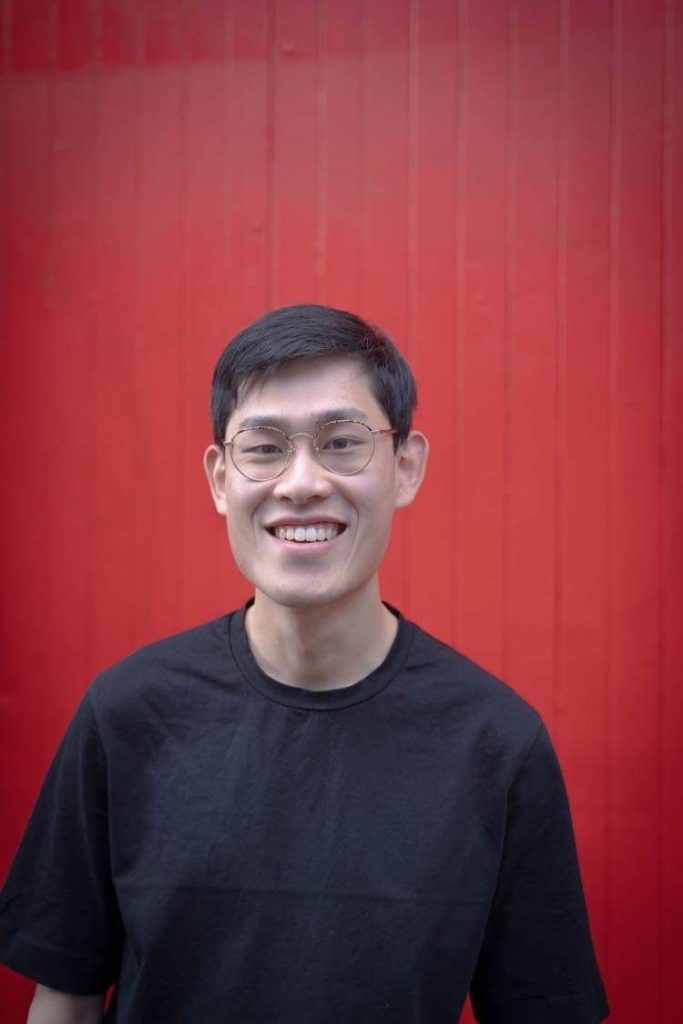
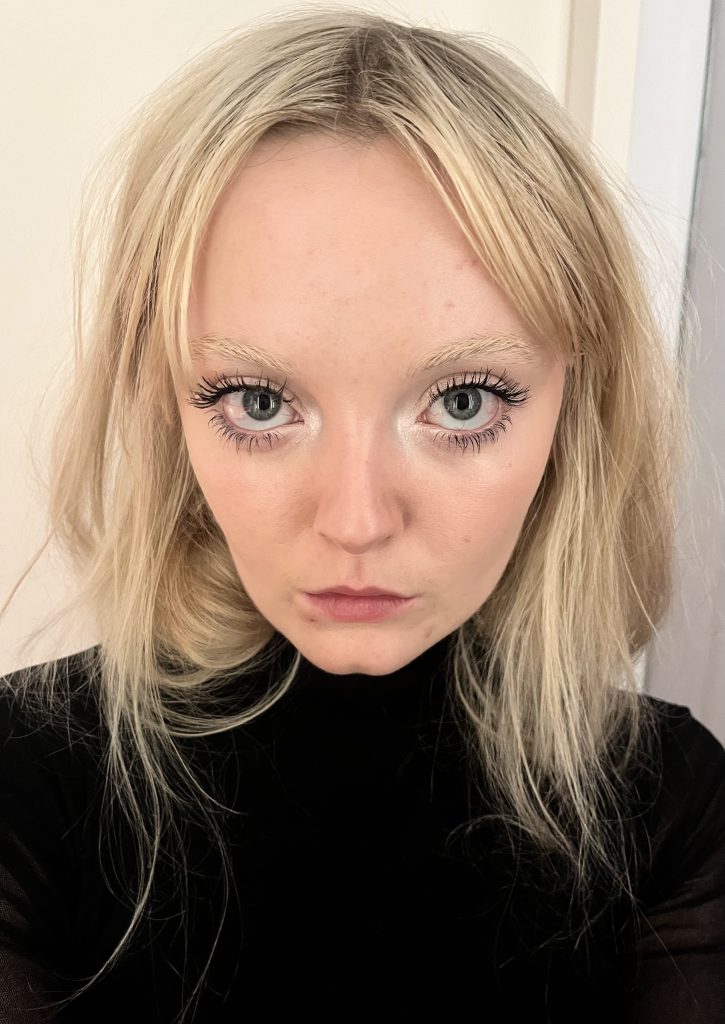
Evan graduated with a Biomedical Science degree before working as a marketing professional in tech. He’s dabbled as a freelance photographer and journalist, shooting for companies such as Notion, and is passionateabout highlighting people and stories from multicultural backgrounds.
Alice Naish, photographer