
Evan Lim meets the German artist whose solo exhibition “This is not the storm” questions all we think we know and feel about the natural world. On now at Melbourne’s Australian Centre for Contemporary Art until June 14. Admission free.
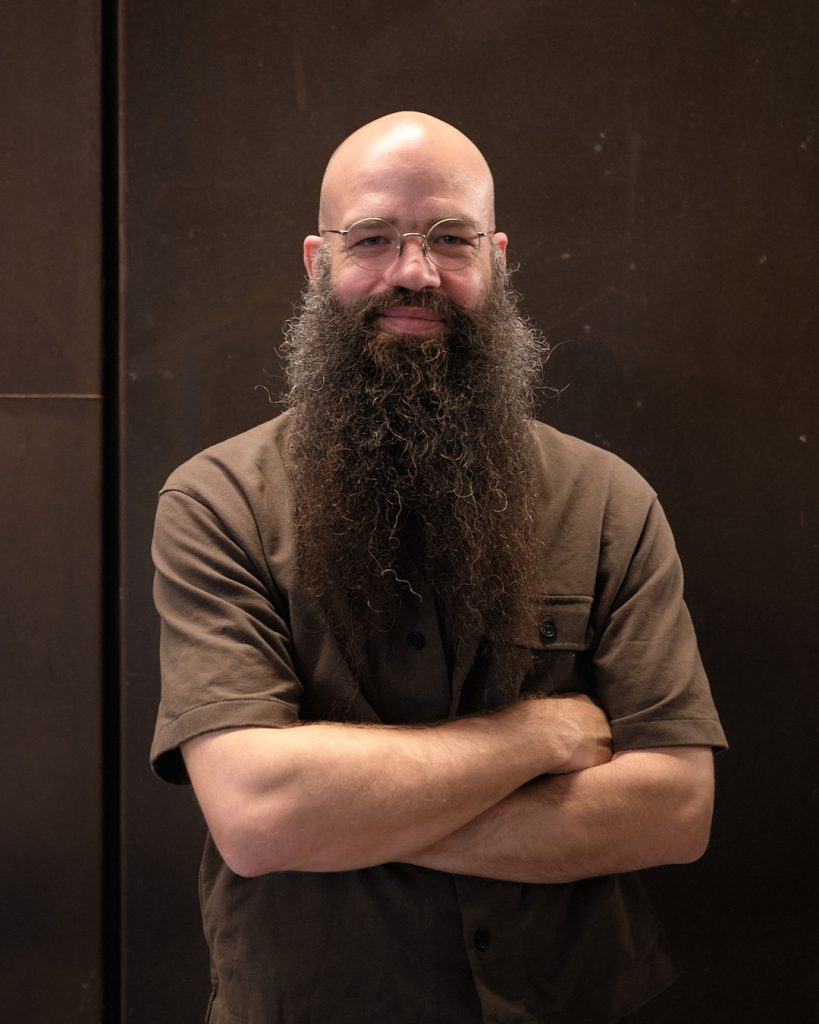
“That word nature is something I’m trying to get rid of…” German artist Julius von Bismarck is blunt. “There’s us, and there’s nature,” he says during the media preview of “This is not a storm”, emphasising the “us” and our separation from the natural. “This set of boundaries is very problematic…one of the reasons that allows us to act in a way that harms ourselves.”
Now installed at ACCA, the artist’s first solo Australian exhibition explores the troubled relationship between humans and nature. He invites viewers to see nature in a different way, through mediums ranging from video installations to kinetic sculpture.
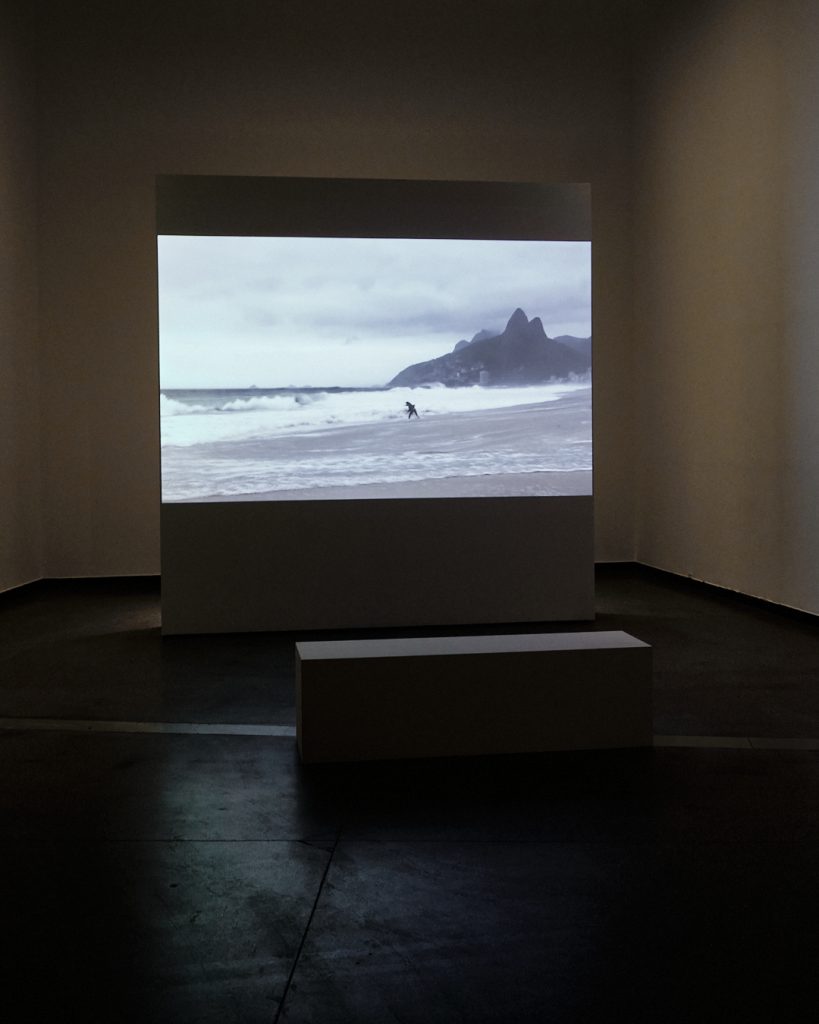
A video installation shows the artist, fully-clothed, whipping ocean waves. It’s part of his Punishment series for which he travelled to iconic landscapes across the world and – yes – whipped them.
Bismarck explains the series was partly inspired by the story of Persian King Xerxes I (518 – 465 BC) who, after learning the ocean destroyed bridges he’d built, ordered to have it whipped.

The artist says he wanted to feel what it was like to do the same, but in current times in which we are; “Dominated by the monotheistic or even Christian construct of nature, where we are the centre of everything, and nature is the garden to enjoy as a present from God.”
In another powerful video installation, Irma to Come in Earnest, the artist captures Hurricane Irma, a momentous storm that hit the American state of Florida in 2017. Bismarck filmed Irma and its aftermath with a slow-motion camera, to describe the hurricane beyond the mainstream media’s typical depictions of panic and urgency.
“I didn’t really know what I was going find in that storm…But I knew I wanted to do a very slow piece,” he explains. “So I bought an extreme slow-motion camera because that’s the easiest way to slow things down.”
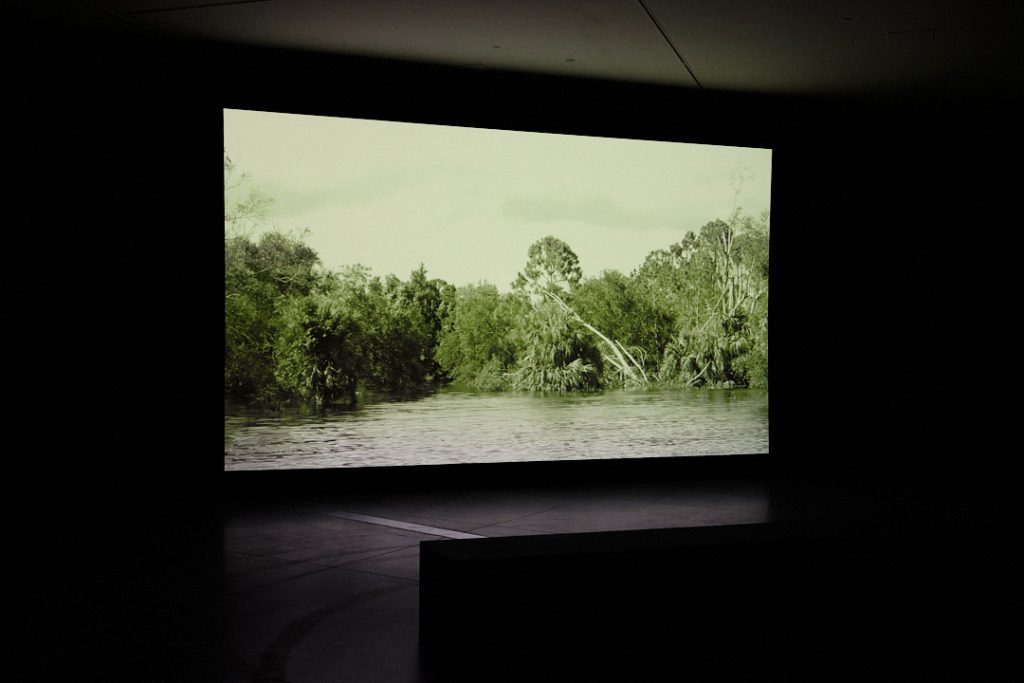
The soundtrack accompanying the film is itself, a slowed down recording of news reporters speaking about the hurricane; so slow that it isn’t recognisable as human speech.
When asked by the show’s curator Dr Shelley McSpedden whether an artist should even be working within a natural disaster, Bismarck admits he was worried whether the firefighters he was following would accept him.
As it turned out, they were frustrated with the media’s depiction of natural disasters and welcomed someone exploring it from another perspective. It was an experience, Bismarck says, that was also mirrored in his encounters in other countries.
“Even though people [might] know nothing about art, you just need to explain what you’re doing, and [that] makes sense to most people.”
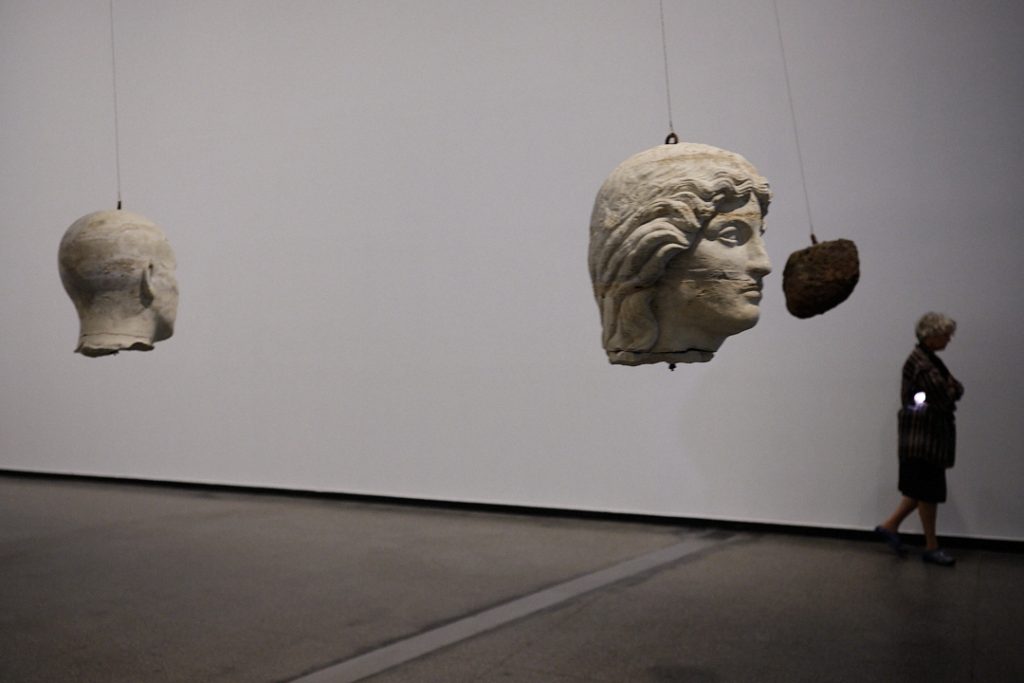
Among Bismarck’s more abstract pieces, Two Heads One Stone is an installation featuring two stone heads and a rock he found 20 metres from the gallery. They’re fixed to the ceiling and swing together in random patterns of wide, pendulous arcs.
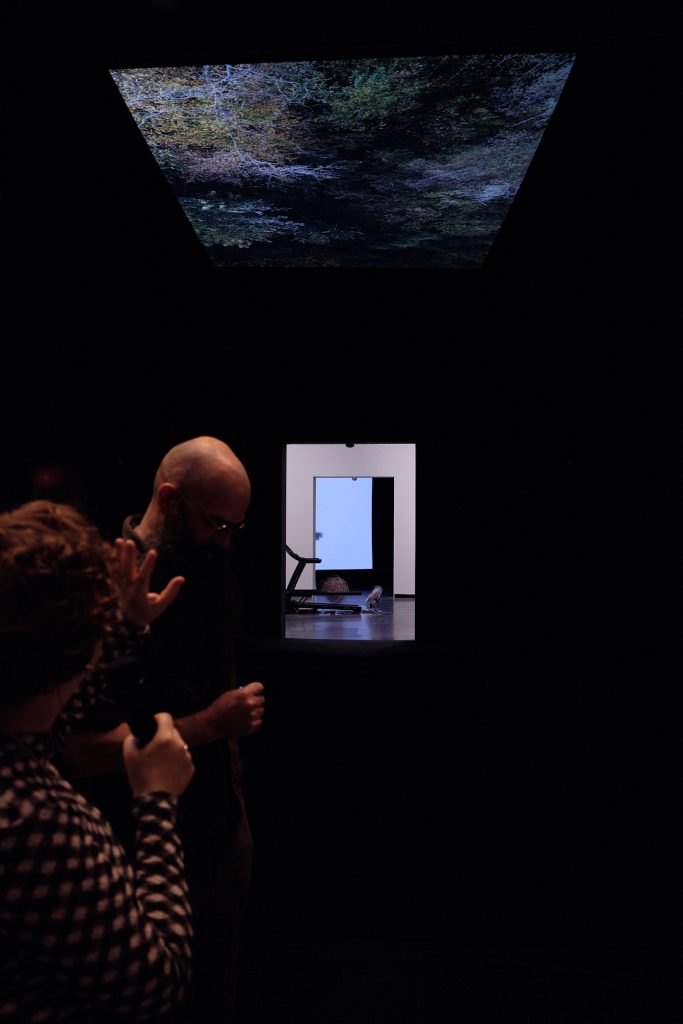
Go forth, my heart! invites visitors to relax on a bed of cushions and look up to the ceiling’s forest scenes of treetops and rustling grass filmed from a “top-down” perspective. Its backtrack is a hymn, sung by Bismarck’s relatives, that he says is typically performed during special occasions such weddings or funerals.
Julius von Bismarck: This is not the storm continues at ACCA (111 Sturt Street, Southbank) to June 14. Check the website for artist talks, tours and related events.
About: Evan Lim